PiGlow
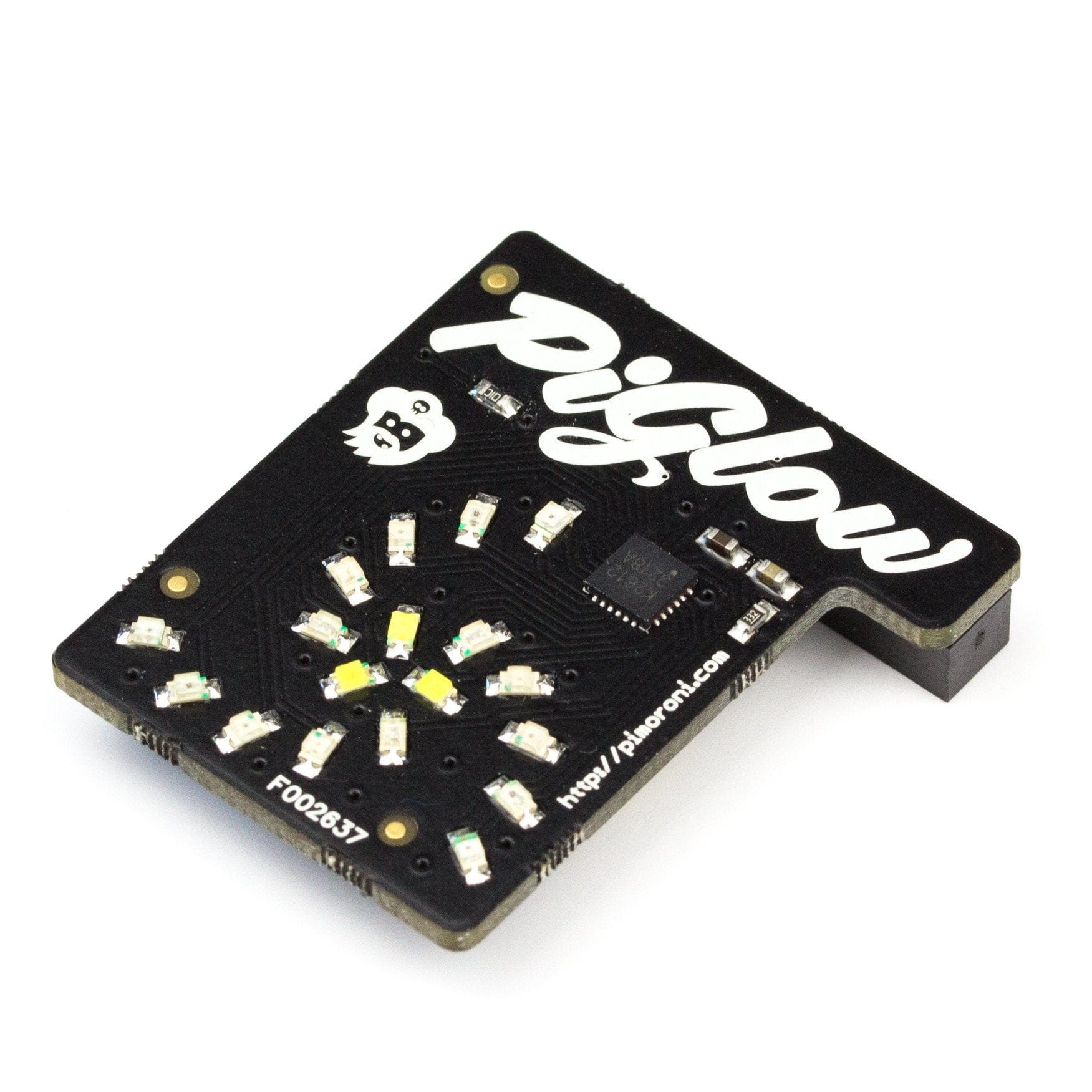
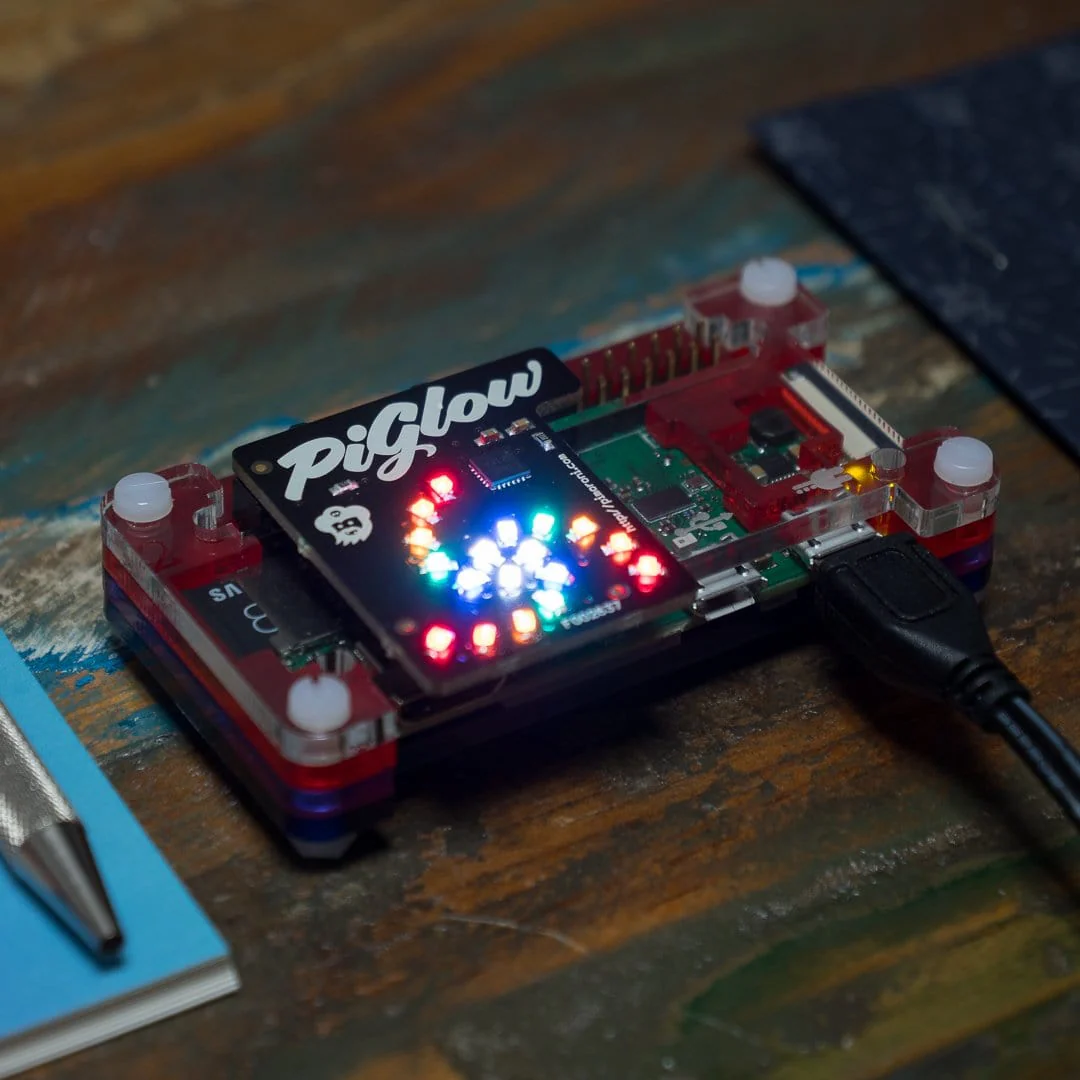

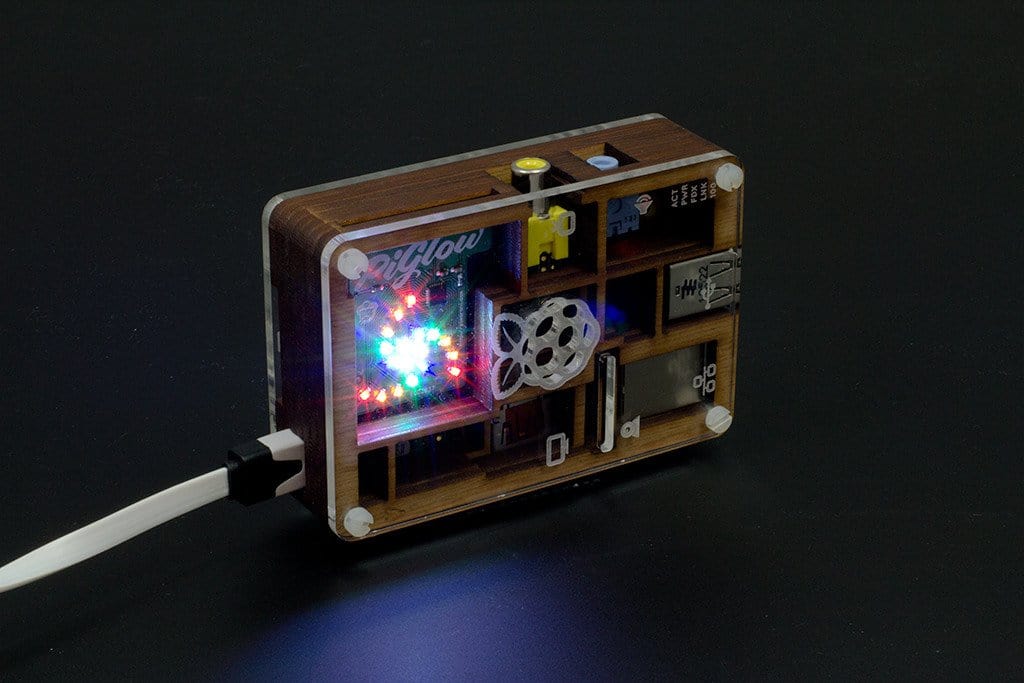
PiGlow is a spiral nebula of 18 coloured, individually-controllable LEDs for your Raspberry Pi.
This diminutive board is compatible with the Raspberry Pi 4, 3, 2, B+, A+, Zero, and Zero W, and can be controlled really simply with our PiGlow Python library.
Use PiGlow for mood lighting/ambience, monitoring the status of your system, scripts, or daemons, Twitter mentions or emails, VESA-mounted behind your monitor or TV, or a zillion other things!
Features
- 18 coloured LEDs (3x each red, orange, yellow, green, blue, white)
- Driven by the SN3218 8-bit, 18-channel PWM LED driver
- Uses I2C (address 0x54)
- PiGlow pinout
- Compatible with Raspberry Pi 3, 2, B+, A+, Zero, and Zero W
- Python library
- Comes fully assembled
Software
Our PiGlow Python library makes controlling PiGlow a piece of cake. You can control the brightness of the different colour groups of LEDs, the arms of the nebula, or individual LEDs - flexible! There's also a handful of examples to show you what can be done.
Our software does not support Raspbian Wheezy.
Community software
A bunch of awesome folks have contributed code for PiGlow. Here's just some of it:
Gordon Henderson has added a PiGlow driver for wiringPi that you can find here: https://wiringpi.com/dev-lib/piglow/
Simon Walters has added PiGlow support for Scratch: https://cymplecy.wordpress.com/
Jason Barnett has put together a great Python class and a load of samples: https://github.com/Boeeerb/PiGlow
Ben Lebherz has forked Jason's project and tidied up the code a bit while adding gamma correction: https://github.com/benleb/PyGlow
Manuel Ernst has created a Node.js library: https://github.com/zaphod1984/node-piglow
Falldeaf has put together a nice XBMC hack to use the PiGlow as a status indicator: https://falldeaf.com/2013/11/the-xbmc-piglow-information-display-addon/
Jonathan Stowe has created a module for the Perl divers among you: https://metacpan.org/release/JSTOWE/Device-PiGlow-1.0
Toon Schoenmakers has gone as far as making a library for Golang: https://github.com/schoentoon/piglow
Bruce Beisel has created a Java package (with GUI simulator and example applications): https://github.com/brucebeisel/PiGlow4J
Robert Peake has made a simple, mobile-friendly, web-based interface, the PiGlow Web Controller : https://github.com/cyberscribe/piglowweb
Joris Vervuurt has created a lightweight Node.js module: https://github.com/jorisvervuurt/jvspiglow
Notes
- Photo-sensitivity warning: flashing, strobing, and patterns of lights may cause epileptic seizures. Always take care and immediately stop using if you feel unwell (dizziness, nausea, affected vision, eye twitching, disorientation).
Product Information
Product Information
Shipping & Returns
Shipping & Returns
Description
PiGlow is a spiral nebula of 18 coloured, individually-controllable LEDs for your Raspberry Pi.
This diminutive board is compatible with the Raspberry Pi 4, 3, 2, B+, A+, Zero, and Zero W, and can be controlled really simply with our PiGlow Python library.
Use PiGlow for mood lighting/ambience, monitoring the status of your system, scripts, or daemons, Twitter mentions or emails, VESA-mounted behind your monitor or TV, or a zillion other things!
Features
- 18 coloured LEDs (3x each red, orange, yellow, green, blue, white)
- Driven by the SN3218 8-bit, 18-channel PWM LED driver
- Uses I2C (address 0x54)
- PiGlow pinout
- Compatible with Raspberry Pi 3, 2, B+, A+, Zero, and Zero W
- Python library
- Comes fully assembled
Software
Our PiGlow Python library makes controlling PiGlow a piece of cake. You can control the brightness of the different colour groups of LEDs, the arms of the nebula, or individual LEDs - flexible! There's also a handful of examples to show you what can be done.
Our software does not support Raspbian Wheezy.
Community software
A bunch of awesome folks have contributed code for PiGlow. Here's just some of it:
Gordon Henderson has added a PiGlow driver for wiringPi that you can find here: https://wiringpi.com/dev-lib/piglow/
Simon Walters has added PiGlow support for Scratch: https://cymplecy.wordpress.com/
Jason Barnett has put together a great Python class and a load of samples: https://github.com/Boeeerb/PiGlow
Ben Lebherz has forked Jason's project and tidied up the code a bit while adding gamma correction: https://github.com/benleb/PyGlow
Manuel Ernst has created a Node.js library: https://github.com/zaphod1984/node-piglow
Falldeaf has put together a nice XBMC hack to use the PiGlow as a status indicator: https://falldeaf.com/2013/11/the-xbmc-piglow-information-display-addon/
Jonathan Stowe has created a module for the Perl divers among you: https://metacpan.org/release/JSTOWE/Device-PiGlow-1.0
Toon Schoenmakers has gone as far as making a library for Golang: https://github.com/schoentoon/piglow
Bruce Beisel has created a Java package (with GUI simulator and example applications): https://github.com/brucebeisel/PiGlow4J
Robert Peake has made a simple, mobile-friendly, web-based interface, the PiGlow Web Controller : https://github.com/cyberscribe/piglowweb
Joris Vervuurt has created a lightweight Node.js module: https://github.com/jorisvervuurt/jvspiglow
Notes
- Photo-sensitivity warning: flashing, strobing, and patterns of lights may cause epileptic seizures. Always take care and immediately stop using if you feel unwell (dizziness, nausea, affected vision, eye twitching, disorientation).